Environmental & Social Due Diligence · Project detail
MOL Gas Storage Project, Hungary
Environmental insight for EBRD-financed underground gas-storage infrastructure at the Szőreg-1 reservoir in Hungary.
01 · The decision context
A reservoir conversion at the centre of a major energy-infrastructure financing decision.
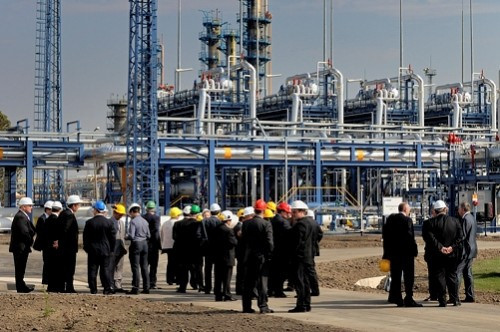
The published project overview describes an EBRD €200 million unsecured corporate loan for the completion and conversion of the Szőreg-1 reservoir in Hungary’s depleting Algyő oil field into an underground gas-storage facility. The project combines a defined financing context with long-life energy infrastructure and an operational setting that calls for careful environmental and social perspective.
02 · Infrastructure frame
Four facts that make the project scale legible.
01
Finance
EBRD unsecured corporate loan
€200 million
02
Asset
Szőreg-1 reservoir
Algyő oil-field context
03
Capacity
1.9 bcm mobile capacity
25 mcm/day peak capacity
04
Use case
Strategic and commercial
Underground gas storage
03 · Bulkai perspective
A clear framework for reading complex energy infrastructure.
01
Infrastructure context
Asset conversion and capacity are positioned within the physical and operational setting.
02
Environmental perspective
Environmental considerations are read alongside the requirements of long-life energy infrastructure.
03
Financing perspective
Scale, use case and financing context are connected in a concise project-level narrative.
Field note
Critical energy infrastructure becomes easier to assess when financing, reservoir conversion, capacity and future use are visible in one practical frame.
MG
04 · Historical project context
A time-specific account of planned operation and intended use.
The original published overview described the facility as approximately 80% complete, with planned strategic operations in January 2010 and commercial operations in March 2010. This historic timing and completion status are retained here as source context, not a statement about the facility’s current operating status.